
THANK YOU FOR SUBSCRIBING
× 
Construction Tech Review Weekly Brief
Be first to read the latest tech news, Industry Leader's Insights, and CIO interviews of medium and large enterprises exclusively from Construction Tech Review

.
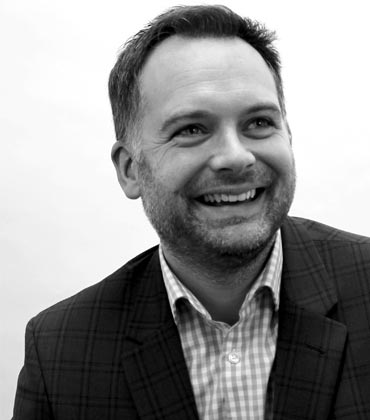
Neil Manthorpe, Associate Director Landscape& Urban Design
Integrating Climate Resilience: Creating Places for People and Nature
.
What are some of the major challenges that have been impacting the Construction Tech space lately?
The world we live in is changing at an unprecedented rate. Industrialization has aided the densification of our cities and the explosion in human population. As a result, there is pressure to keep up with the ever-increasing human population and the demands these place on the future of our planet. The scenario is beginning to change through more sustainable development, infrastructure and the integration of sustainable design principles in all of the work that we do. New tools, technologies and innovations are continuing to evolve to create sustainable places for people and nature, that are in turn being adopted and promoted by central and local policies.
The achievement of net-zero and climate resilience are two key drivers within the industry that were discussed at the recent COP 26 in Glasgow. Our clients and stakeholders are increasingly demanding us to deliver net-zero designs. We are seeing this realized through more climate-resilient places with a more holistic design approach informed by data that create places for both people and nature. This can be done at both the micro and macro levels, be that a local street or a full-fledged city. Much of our work is focused around the delivery of net zero and integrating climate resilience into our streets, buildings, public places and cities.
Which are some of the technological trends which excite you for the future of the Construction Tech space?
We're seeing increased use of data and digital tools to inform, validate, communicate and improve our design approach. The industries are venturing further into fields like micro-climate analysis. MCA can be used when designing anything from an urban square to a new station or school. Micro-climate analysis is now used to understand and work with things like wind comfort levels, solar heat gain, the degree of shading, air quality and soil moisture. All of these factors play an important role in the success of how a place or a building feels to be within.
Movement analysis (MA) is also used by designers to understand the circulation of people at both micro and macro levels. Understanding desire lines, access and circulation have always formed a fundamental part of the design process. With improved accuracy and data presentation this is resulting in improved public realm design, buildings and infrastructure that are tailored to the multitude of end user groups.
Can you tell us about the latest project that you have been working on?
Our need, as designers, is to better protect and manage our natural resources. So, we are frequently designing climate resilient places for people and nature. These more balanced environments can be better managed the more extreme climates, for example a scarcity of water and flash floods in the summer months and persistent flooding in the winter. We have been exploring improved ways of integrating sustainable urban drainage systems and looking at ways to retain water within some of these areas rather than it going straight into the sewage systems. We're looking at our cities as natural ecosystems, places where people and nature can come together.
One recent project we have been able to adopt this approach is at the Barbican Podium in the City of London. This project is proactively tackling the issues of climate resilience with an increase of up to 80% in the urban greening coverage of the podium. This is creating a huge range of benefits in biodiversity, water management, local micro climate and a more holistic design approach that fits with the historic and cultural setting of the Barbican.
"As designers we have an opportunity to create better places for people and nature, through early collaboration and the integration of climate resilient design principles."
Urban greening is about looking to build something that will benefit future generations. I am quite positive that we're going to observe a continued increase in urban greening of the public realm with green walls, green roofs and more adaptable places. There is an exciting opportunity to make our streets more flexible and adaptable to a more diverse range of uses. A focus on these places being multi functioning, creating more sociable environments and benefiting the wider environment.
How has the pandemic affected the construction industry?
Covid-19 has completely changed the way we function as an industry. One of the things that have happened is there's been an increase in the level of online collaboration, both nationally and internationally.
The articles from these contributors are based on their personal expertise and viewpoints, and do not necessarily reflect the opinions of their employers or affiliated organizations.
Top
